Professionals: A Step-by-Step Enrollment Guide for Organizational ALRs
Published on
May 4, 2026
For Organizational Authorized Legal Representatives (ALRs) supporting individuals with disabilities, conversations about ABLE account management often begin with one key question:
What does the enrollment process actually look like?
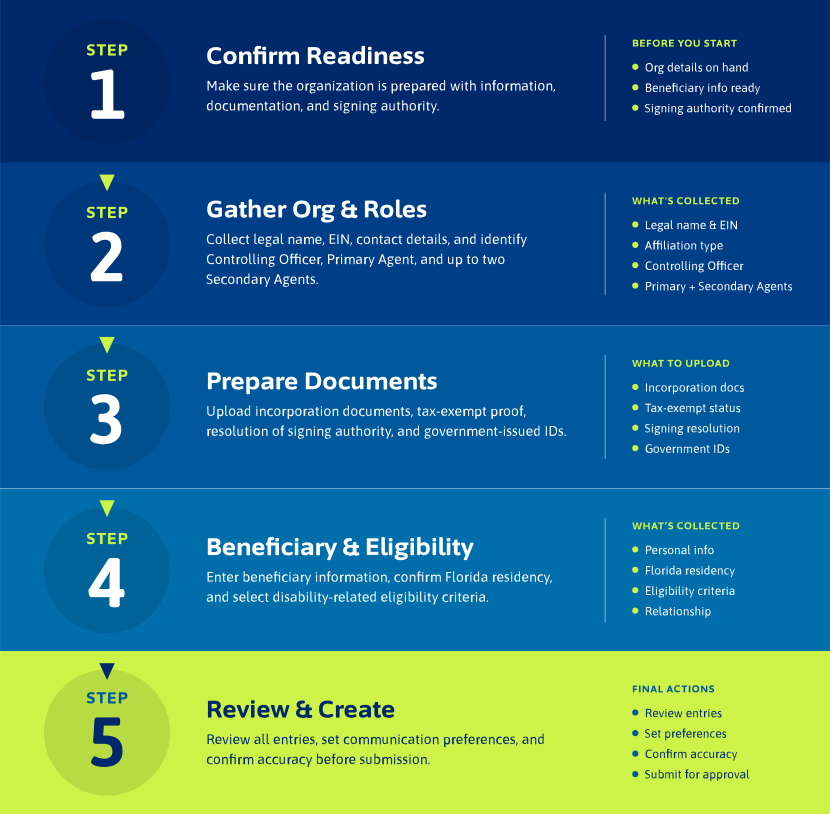
The ABLE United organizational registration process is completed online and includes several key stages — from entering organization details to confirming beneficiary eligibility and finalizing account setup.
Step 1: Confirm the organization is ready to register
Before beginning, the organization should be prepared to provide information about the organization, beneficiary, and designated representatives, and upload required documentation. The process also confirms that the individual completing the registration has signing authority.
Step 2: Gather organization and role information
The registration collects details such as the organization’s legal name, EIN, contact information, and affiliation (nonprofit, for-profit, or government). It also requires identifying key roles, including the Controlling Officer and Primary Agent, with the option to add up to two Secondary Agents.
Step 3: Prepare required documentation
Documentation requirements vary by organization type, but may include incorporation documents, proof of tax-exempt status, a resolution of signing authority, and government-issued identification for key individuals.
Step 4: Add beneficiary and eligibility details
The process includes entering the beneficiary’s personal information, confirming Florida residency, and selecting the appropriate eligibility criteria, including disability-related qualifications and relationship to the beneficiary.
Step 5: Review, select preferences, and create the account
Before submission, users review all entered information, select communication preferences, and confirm accuracy. Once approved, the organization can proceed with funding and ongoing account management.
For organizations serving individuals with disabilities, understanding this process can help make conversations with clients more approachable — turning a complex enrollment into a clear, manageable set of steps.
Privacy is important to us, so you have the option of disabling certain types of storage that may not be necessary for the basic functioning of the website. Blocking categories may impact your experience on the website.
Thank you! Your submission has been received!
Oops! Something went wrong while submitting the form.
Essential
These items are required to enable basic website functionality.
Personalization
These items allow the website to remember choices you make (such as your user name, language, or the region you are in) and provide enhanced, more personal features.
Marketing
These items are used to deliver advertising that is more relevant to you and your interests.
Analytics
These items help the website operator understand how its website performs, how visitors interact with the site, and whether there may be technical issues.
We use cookies and similar technologies to support essential site functions, personalize content, and analyze site usage. You can accept all cookies, reject non-essential cookies, or manage your preferences at any time. Learn more in our Cookie Policy.